Key takeaways
- Drywall dust is fine and travels easily.
- Plastic barriers and sealed vents keep it contained.
- Vacuum-assisted sanders and wet methods cut dust at the source.
- A thorough final clean matters as much as the finishing.
Before work starts
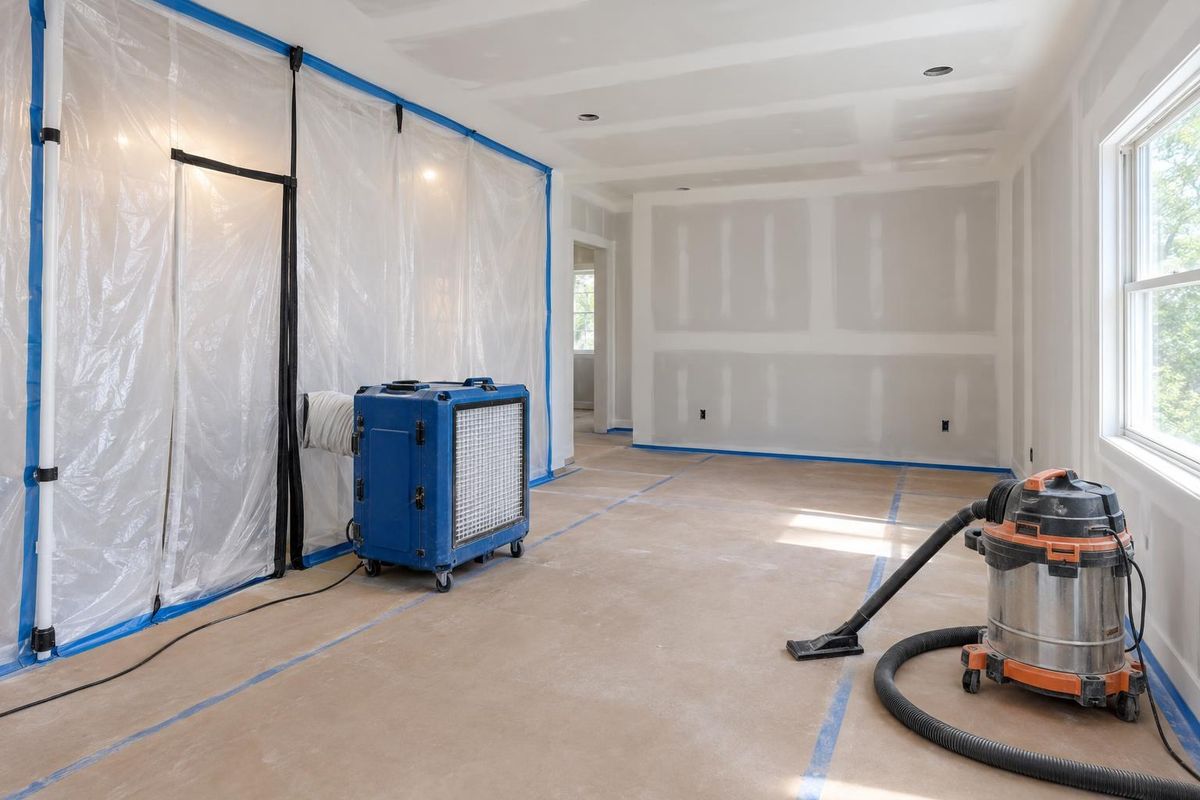
Move furniture out or cover it, tape plastic over doorways, close and cover HVAC vents and protect floors with paper or film. Setting up a zip-wall barrier at the entry to the work area keeps dust from drifting into the rest of the house.
Turn off the system fan while dust is being created.
During sanding
Vacuum-attached sanders pull dust right at the tool. Wet sanding sponges avoid airborne dust in small areas. Air scrubbers with filters clean the air in the work zone. Workers wear respirators and eye protection.
Fine dust can irritate lungs, so people with asthma should stay clear.
Daily clean-up
Floors are vacuumed with a HEPA vacuum. Sweeping alone throws fine dust back into the air. Surfaces are wiped with damp cloths. Debris is bagged and removed.
A tidy site is also a safer site.
The final clean
After the last sanding, the whole area gets a careful vacuuming and damp wipe, including tops of trim and window sills. Filters on air scrubbers are replaced. The barriers come down only after the dust has settled.
Plan to replace your HVAC filter after the project.
Quick answers
Can drywall work be done without any dust?
Dust cannot be eliminated, but good methods keep it low.
Is drywall dust harmful?
It is an irritant, so people with sensitive lungs should stay out of the work area.
Should I leave during the work?
Many families stay, with the work area sealed. It is your choice.