Key takeaways
- Stains, bubbling paint and soft spots point to moisture.
- Find and fix the source before repairing the wall.
- Soft or crumbling drywall should be replaced, not painted.
- Persistent musty odors deserve a specialist's attention.
What you can see
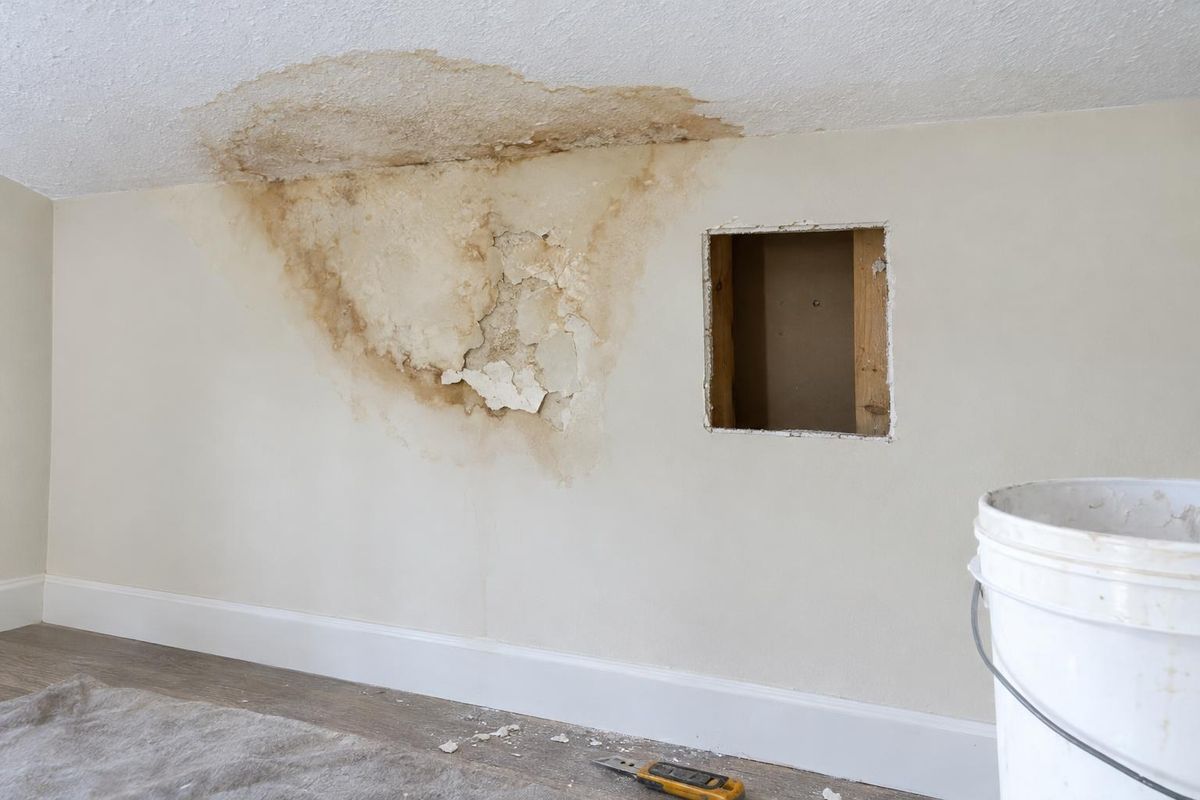
Brown or yellow rings, especially on ceilings, are the classic sign. Paint may bubble, peel or look wrinkled. Tape seams may lift. Walls can look slightly bowed, and a ceiling can sag between joists. Rust on screws or corner bead shows long-term moisture.
Stains that grow after rain suggest a roof or window leak.
What you can feel and smell
Press gently on a suspect area. If it feels soft, spongy or crumbles, the gypsum has been damaged. A damp or musty odor suggests hidden moisture inside the wall.
A moisture meter can find damp areas that are not yet visible.
What to do first
Turn off water to the source if you can, and call a plumber or roofer to find and fix it. Dry the area thoroughly. Do not paint over wet drywall, since the problem will return. If you suspect mold, have the area assessed by a qualified specialist before repairs.
Take photos for insurance purposes.
How repair works
Once the source is fixed and the wall is dry, damaged sections are cut out, new board is installed, taped, finished and textured. A stain-blocking primer helps keep old marks from showing through the paint.
Replacing a small section is often simple, and larger areas take more time.
Quick answers
Can drywall dry out and be saved?
Lightly dampened board sometimes dries, but soft or stained board should be replaced.
Will paint cover a stain?
Ordinary paint may not. Stain-blocking primer can help after repair.
Is a stained ceiling dangerous?
A wet, sagging ceiling can be, so keep clear and call for help.