Key takeaways
- Drywall goes up in stages: hang, tape, mud, sand and prime.
- Each coat of compound needs time to dry before the next.
- Good framing and tight seams make finishing easier.
- The finish level you choose sets how smooth the wall will look.
Framing and preparation
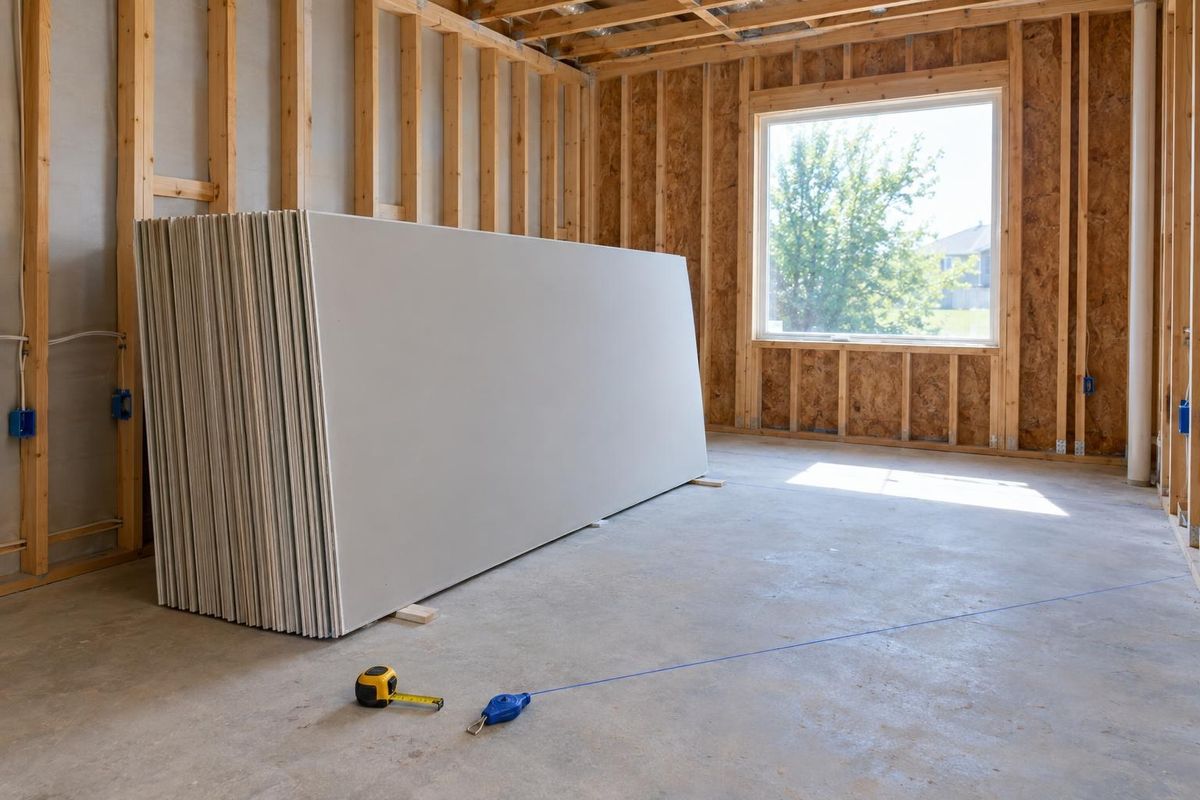
Before drywall goes up, the framing is checked for flatness, electrical and plumbing rough-ins are finished and insulation is installed where called for. High spots on studs are planed and low spots shimmed, because drywall can only be as flat as what is behind it.
Material is delivered and stacked in the rooms where it will be used, so crews are not hauling heavy sheets around the house.
Hanging the board
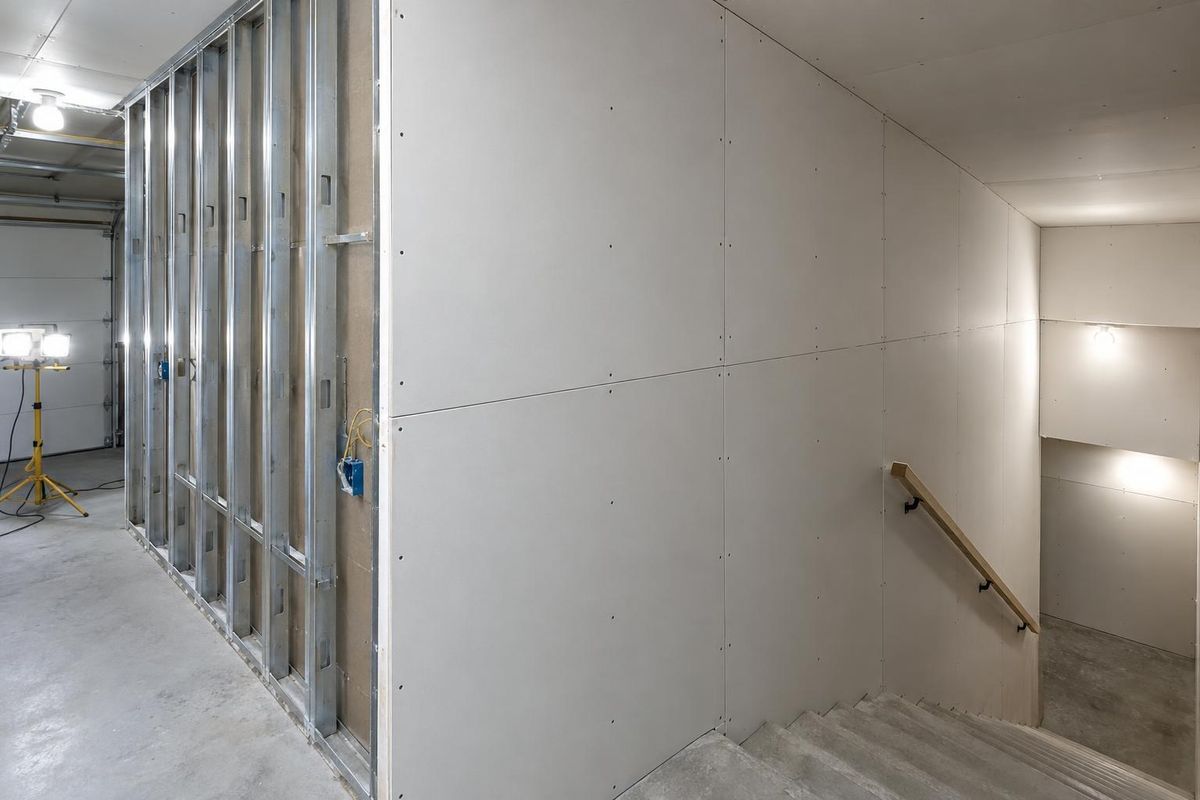
Ceilings go first, using a lift to hold the sheets tight to the joists. Walls follow, usually installed horizontally so that seams land at a convenient height. Screws are driven just below the paper surface, without breaking it, at the spacing the board requires.
Openings for outlets, windows and doors are cut accurately, and corner bead is installed on outside corners.
Taping and mudding
Paper or mesh tape is embedded in compound over every seam. Screw heads and bead are covered. A second coat goes on wider, and a third coat wider still, feathering the edges so the joint becomes invisible. Each coat dries before it is sanded or covered.
Weather matters. Damp, cold air slows drying and warm, dry air speeds it.
Sanding, priming and texture
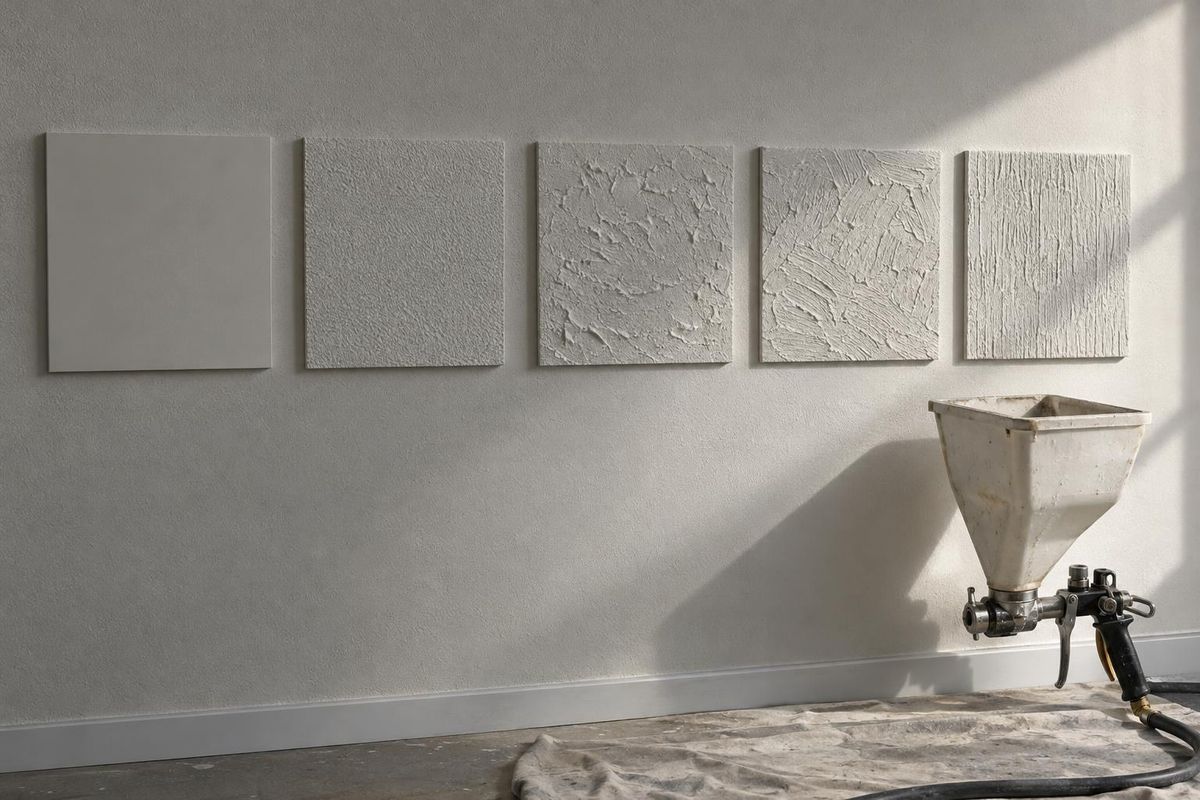
Dry compound is sanded smooth with attention to dust control. The wall is then primed, which seals the paper and compound so paint absorbs evenly. If texture is part of the plan, it is applied before priming.
A final look in raking light finds anything that needs another touch.
Quick answers
How long does a typical room take?
From hanging to primed, a room often takes about a week because compound needs drying time between coats.
Can finishing be rushed?
Not safely. Coats that are not dry shrink and crack later.
What should I do before drywall starts?
Clear the room, make sure rough-in inspections are complete and keep the space dry.