Key takeaways
- Homes built before the mid-1980s may have asbestos in popcorn texture.
- Testing comes first, and safe removal follows the result.
- Removal is messy, so protection and containment matter.
- Finishing options include smooth, skim-coated or lightly textured ceilings.
Test before you touch it
Older popcorn ceilings, especially in homes built before the mid-1980s, can contain asbestos fibers. Disturbing them can release the fibers into the air. Have a sample tested by a qualified lab before scraping, and follow professional guidance if asbestos is present.
Newer ceilings are usually asbestos-free, but a test still gives certainty.
The removal process
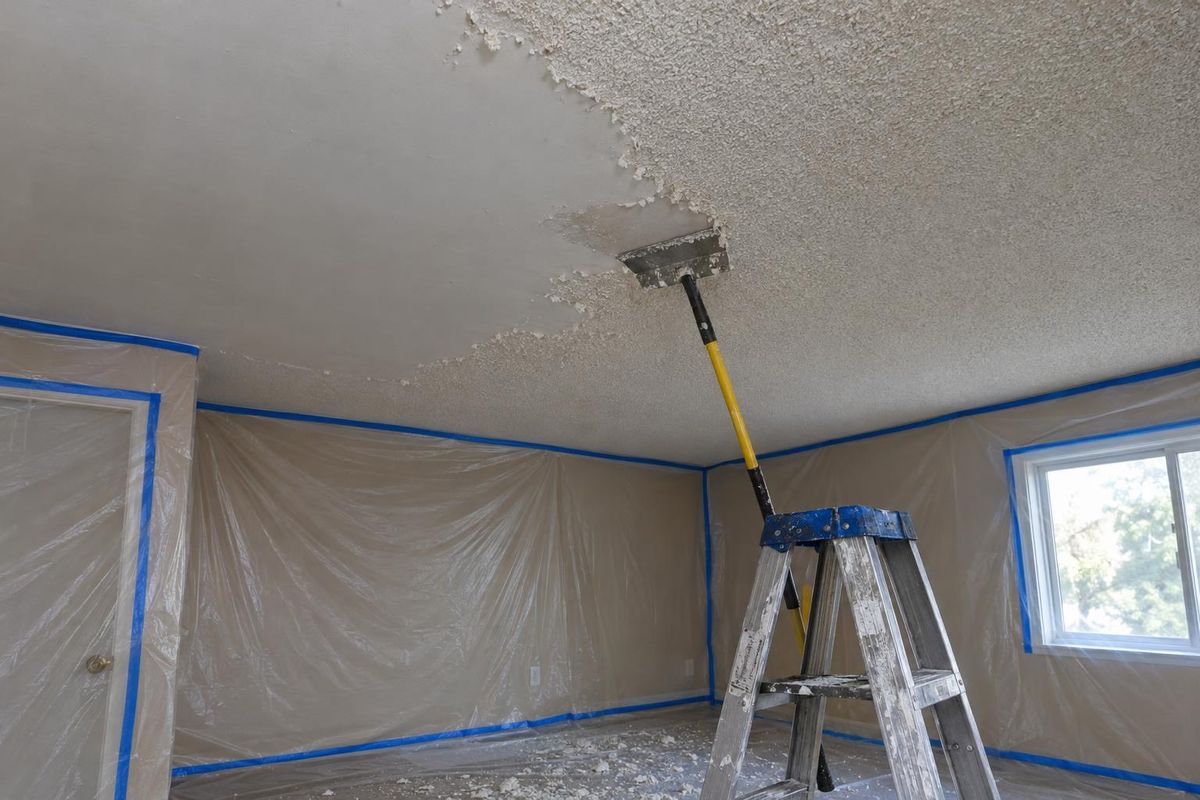
The room is emptied or covered, floors and walls are protected with plastic and the texture is lightly misted with water to soften it. A wide scraper removes the texture in strips. The scrapings are bagged and removed. Wet methods reduce dust.
Painted popcorn is harder to remove, since paint seals the texture.
Repair and refinish
Scraping often leaves dings and bare spots. After the ceiling dries, flaws are repaired, a skim coat or light texture is applied and the surface is primed and painted.
A smooth ceiling makes rooms look taller and brighter.
Choosing your finish
Smooth ceilings suit modern styles, and need a high finish level. A light orange peel or knockdown hides flaws more forgivingly. A skim coat is the strongest choice if you plan glossy paint or strong lighting.
Ask for a small sample area to see the result.
Quick answers
Is removal a do-it-yourself job?
It can be, but testing, containment and refinishing make it a big job. Many owners hire a pro.
Can you cover popcorn instead?
Yes. New drywall or planks over the ceiling hide it without removal.
How long does removal take?
A typical room takes a few days with drying time.